
Finding Piqua Residents Carefully
No single public list identifies everyone at a Piqua address. The Miami County Auditor can connect a parcel, address, or owner to a property record. The Recorder documents people who signed recorded land instruments. Ohio's voter system can confirm public registered-elector information when the required name and county match. Piqua Public Library helps with older households through directories, newspapers, house files, and yearbooks. Each result is a record of a particular activity, not a complete description of a household.
Choose the starting point from the information already in hand. A street address belongs first in the Auditor search. An owner name can open a deed trail in the Recorder index. A past address or family question may be better suited to the Local History and Genealogy Department. When a screen has no relevant result, the responsible office, its counter, or a focused public-records request is more useful than guessing from a similar name.
- Search the Miami County Auditor by parcel, owner, or address and save the parcel number, situs, and legal description.
- Use the owner name and legal description in the Recorder's land-index route to identify the matching document.
- For a registered elector, use Ohio My Voter Information with first name, last name, and Miami County.
- For a former household, ask Piqua Public Library to check the appropriate directory, newspaper, yearbook, or house file.
- Request a specific public record from the custodian when the online route does not include the needed series.
Piqua Resident Record Offices
Piqua has city-level sources, but the records that most often connect names to land, tax parcels, elections, probate matters, and court files are largely Miami County operations in Troy. That split matters. A city permit file is requested from Piqua, while a deed is recorded with the County Recorder and a parcel card is maintained by the County Auditor. For an address-by-address route, use the Piqua street directory guide after identifying the responsible office.
Miami County Board of Elections
215 W. Main Street
Troy, OH 45373
937-440-3900
Piqua Parcel Search Fields
The Miami County Auditor Real Estate Quick Search uses one visible field labeled “Search by Parcel, Owner or Address.” County guidance suggests an owner surname first for a name search and a house number only when an address search needs simplifying. A result opens a parcel card rather than a general list of people. That card can establish the parcel's recorded relationship to a person or mailing contact, and it provides the legal information needed to avoid confusing nearby properties.
| Auditor field or tab | Useful Piqua record detail | Careful reading |
|---|---|---|
| Parcel, owner, address | Starting query and property identifier | A search result needs confirmation against the card. |
| Location and legal | Situs, municipality, legal description, lot or parcel context | The situs is the physical parcel location. |
| Deeded-owner and taxpayer fields | Tax and recorded-owner contact information | Mailing contacts may differ from the situs and from each other. |
| Sales, land, improvements, tax | Recorded property and valuation context | These are property fields, not a household count. |
The official Auditor search screen shown here is the entry point for a Piqua address check.
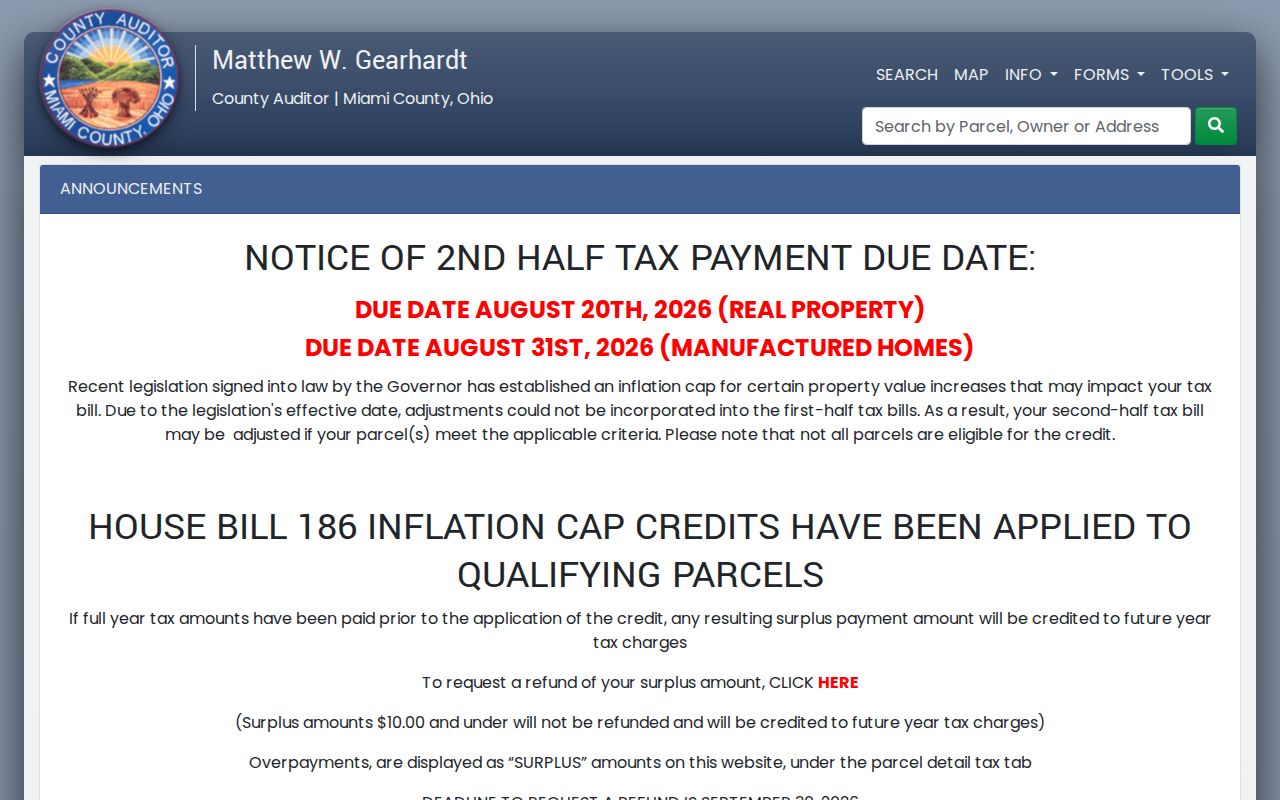
Use the returned parcel number and legal description to compare later records, rather than treating a mailing field as proof that a named person lives at the property.
Piqua Deed Index Trail
Recorded land is a useful Piqua property-research source when the question is ownership or a property's documented history. The Recorder says deeds are on file from Miami County's formation in 1807. Its free Basic Records Search is a name-centered route: enter Last Name or Business Name and First Name, select the document name under the document-number heading, then open the page icon. Free images are watermarked. The office can provide non-watermarked copies for $2 per page under its current instructions.
Do not start the Recorder with a street and expect a complete result. The county specifically cautions that address and parcel numbers are absent from some instruments. Start with the Auditor's current owner and legal description, identify a deed's grantor, grantee, date, and recording reference, then work backward through the former owner. For 1980 through 1999, the Recorder directs researchers to verify index data against the Geographical Indexes. Pre-1980 requests may require office help or the deeper Laredo route.
The county's Online Records Search instructions show the authorized land-record routes used for Piqua addresses.
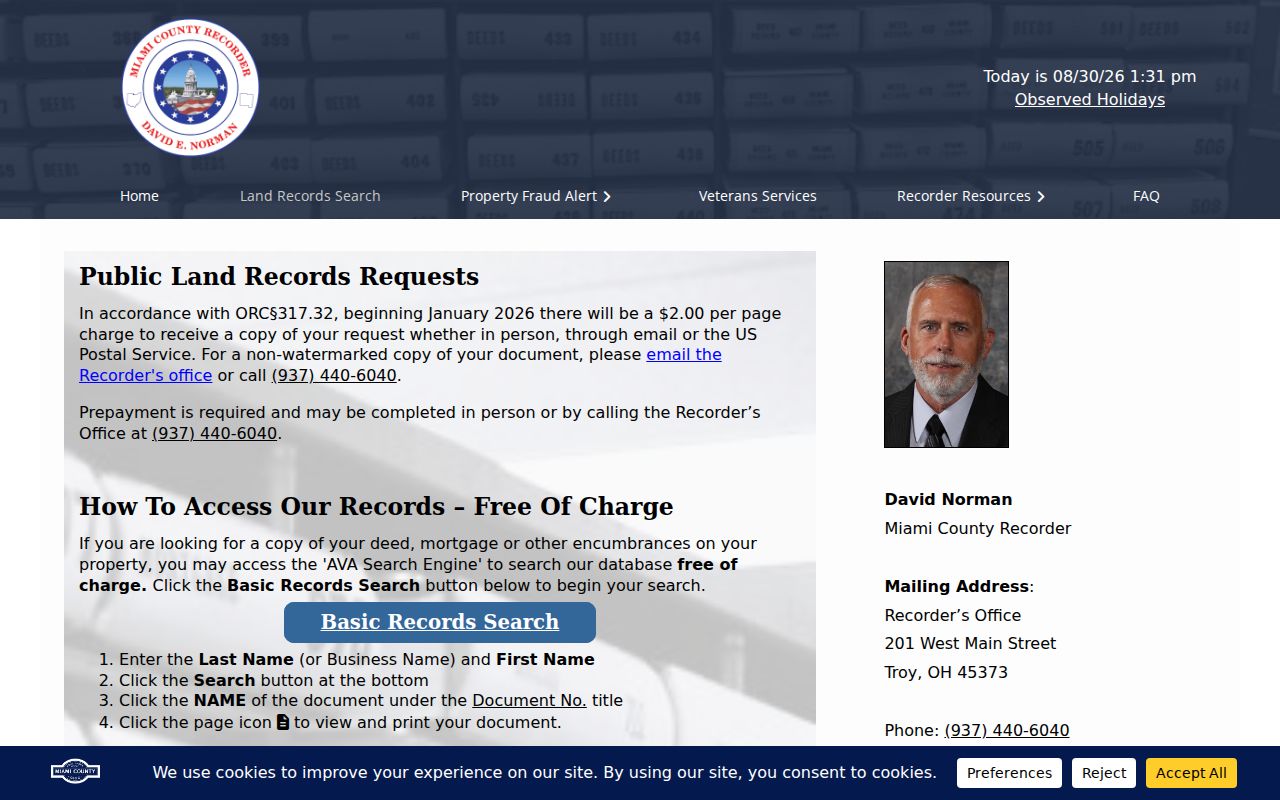
A document party and a legal description form a stronger trail than a surname match alone, especially where an older street description is incomplete.
Piqua Voter Record Boundaries
Ohio My Voter Information is person-centered. Its public form requires first name, last name, and county, with Miami selected for Piqua. The official search suggests trying a derivative first name, prior surname, or previous Ohio county when appropriate. Statutes make voter-registration forms and the statewide database public with important exceptions. Public fields can include a registered elector's name, birth date, current residence address, precinct, registration date, voting history, and last activity date, subject to the system's rules and protections.
That does not make the voter tool a Piqua street directory or an open block roster. The statewide interface does not offer an unrestricted street browse. The Miami County precinct application can search a street segment for precinct and polling-place information, not a list of people. The Board of Elections is the appropriate local contact for lawful review of public registration material, and its access timing can be limited around an election when copying would interfere with board work.
The Ohio voter lookup is the official person-search form for this type of Piqua record check.
Piqua Residents Directory Sources
Current sources do not all list the same people. Property cards identify recorded property and tax contacts. Recorded instruments name parties to a document. A voter result concerns a registered elector when public. Court, probate, and vital-record systems document cases or life events, not a current address list. Use the resident lookup workflow when one name needs careful verification across more than one official source.
| Directory-like source | What it can show | Custodian | Access channel |
|---|---|---|---|
| Auditor parcel card | Recorded owner, situs, legal and tax-contact fields | Miami County Auditor | Parcel, owner, or address search; office counter. |
| Recorder index | Parties to deeds, liens, plats, and other instruments | Miami County Recorder | Free Basic Search, Laredo, phone, email, or counter. |
| Voter information | Public registered-elector information where allowed | Ohio Secretary of State / Board | Required-name web lookup and Board access. |
| Probate CaseLook | Public probate case information subject to court limits | Miami County Probate Court | CaseLook, request, or counter verification. |
| Local History collections | Past directory, family, house, school, and newspaper context | Piqua Public Library | Appointment or in-person research. |
Piqua Court and Probate Checks
Court or probate material can help distinguish people with similar names, but it should not be stretched into a residency claim. Miami County Common Pleas and Municipal clerks maintain different public case channels. Probate CaseLook covers probate matters and warns that its data can lag at least 24 hours; a verified record requires a request or a visit to the court. Probate also holds Miami County marriage records from 1807, birth records from 1853 through 1908, death records from 1867 through 1908, and estate, guardianship, trust, and miscellaneous records from 1807.
The Miami County Probate CaseLook page is useful for finding the court channel, while the court remains the source for confirmation.
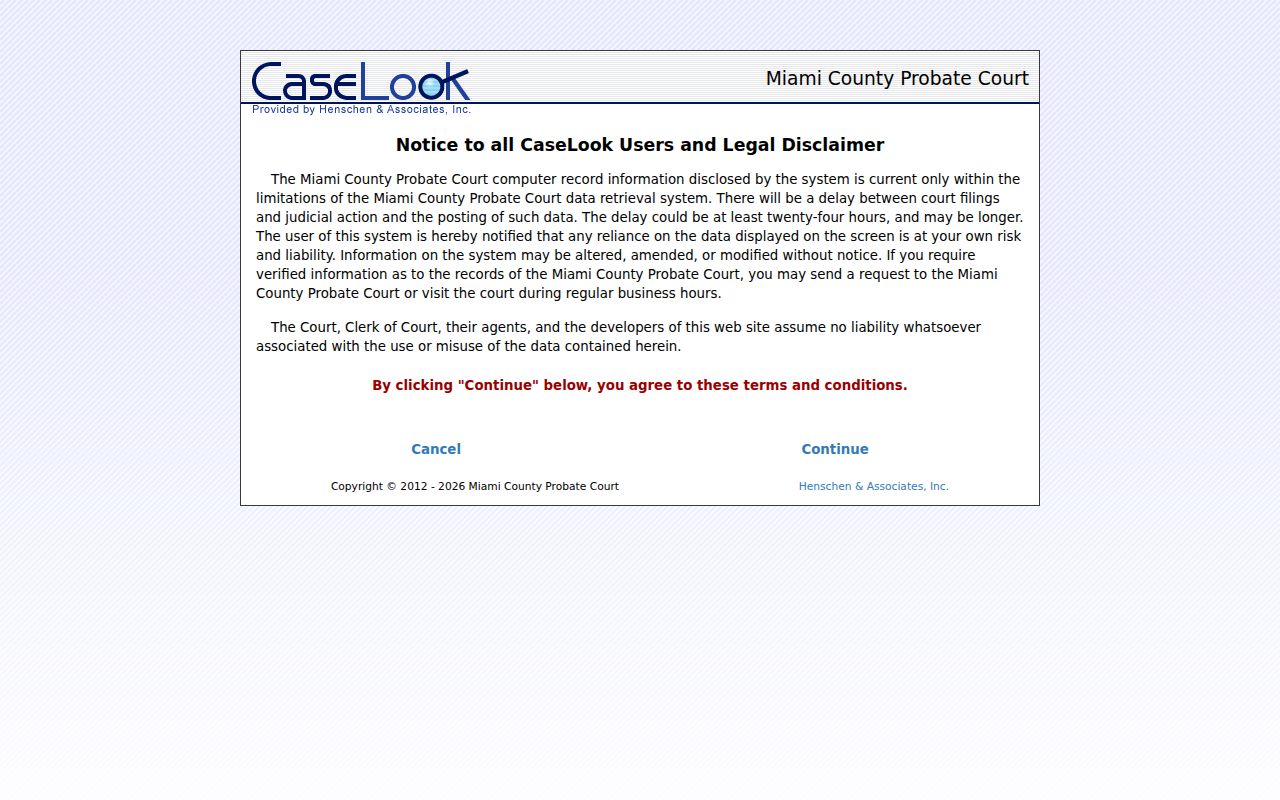
Record the case number, division, date, and party role before comparing any case result with property or directory evidence.
Piqua Local History Connections
Piqua Public Library's Local History and Genealogy Department is the strongest human-use complement to a current local directory. Its noncirculating materials focus on Piqua and Miami County families, houses, local businesses and industries, events, migration origins and destinations, military history, and Piqua and Lehman High School yearbooks. It is located at 116 W. High Street, and research access is available by appointment or during the department's stated hours. A family-history question often needs this shelf, not another current web search.
Library documentation supports a Piqua city and telephone directory run from 1911 to 1986. The department's database offerings include in-library Ancestry Library Edition along with HeritageQuest, Fold3, newspapers, African American Heritage, and the Historic Dayton Daily News collection for 1898 through 1922. Ask staff which volume, format, or file belongs to the year at issue before assuming that a reverse street section exists.
The Piqua Local History and Genealogy Department describes the local collections that make older family and house research possible.
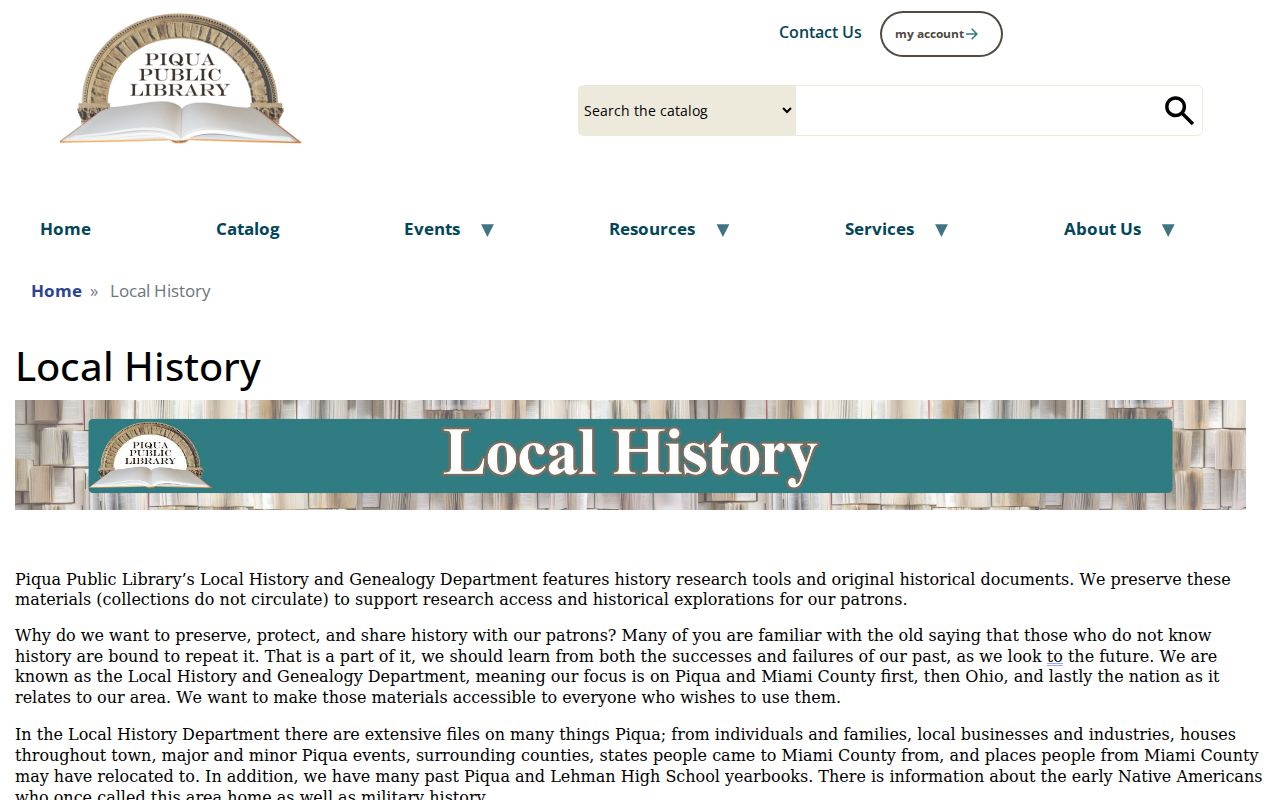
Local History can connect an old address to dated directory, newspaper, yearbook, or house-file context without claiming that a historical listing proves present residence.
Piqua Record Request Routes
Ohio's Public Records Act, ORC 149.43, supplies a fallback when a public record is not in a searchable portal. The law calls for inspection at reasonable times during regular hours and copies within a reasonable period, while allowing many records to remain exempt. A useful request identifies the office, record series, name or address, date range, and preferred inspection or copy format. It does not ask staff to identify a person or give a legal conclusion.
Piqua City Offices direct public-record requests to separate police, crash, and non-police paths. The city lists regular inspection and copying hours of 8 a.m. to 4 p.m., Monday through Friday, excluding holidays. A municipal permit or code file belongs with the city; an instrument belongs with the Recorder; a court file belongs with the appropriate clerk or Probate Court. This division prevents a Piqua record search from stopping at the wrong counter.
The City of Piqua public-records request page is the municipal request route for records it holds.
For a birth or death question, the Ohio Department of Health vital-records system helps identify the state-level access route after the local year-based custodian has been checked.
Follow the year-based custody route rather than assuming that a city, county, and state office keep the same record.
Piqua Residents Directory Privacy
Public availability has limits. Safe at Home can protect qualifying survivors through a substitute address and confidential voter registration. Ohio voter records also exclude Social Security numbers, driver or state-ID numbers, phone numbers, email addresses, and other protected information. Adoption, sealed court, juvenile, medical, driver, and utility-account information are not a substitute layer for a public Piqua search. A missing result can reflect a protection, a different custodian, or a record that was never created.
Use records lawfully. Property, court, and directory material can support personal history, heir research, civic questions, and fraud checks. Do not use any source to stalk, harass, threaten, impersonate, or expose someone; Ohio law addresses menacing by stalking and telecommunications harassment.
Piqua State Record Searches
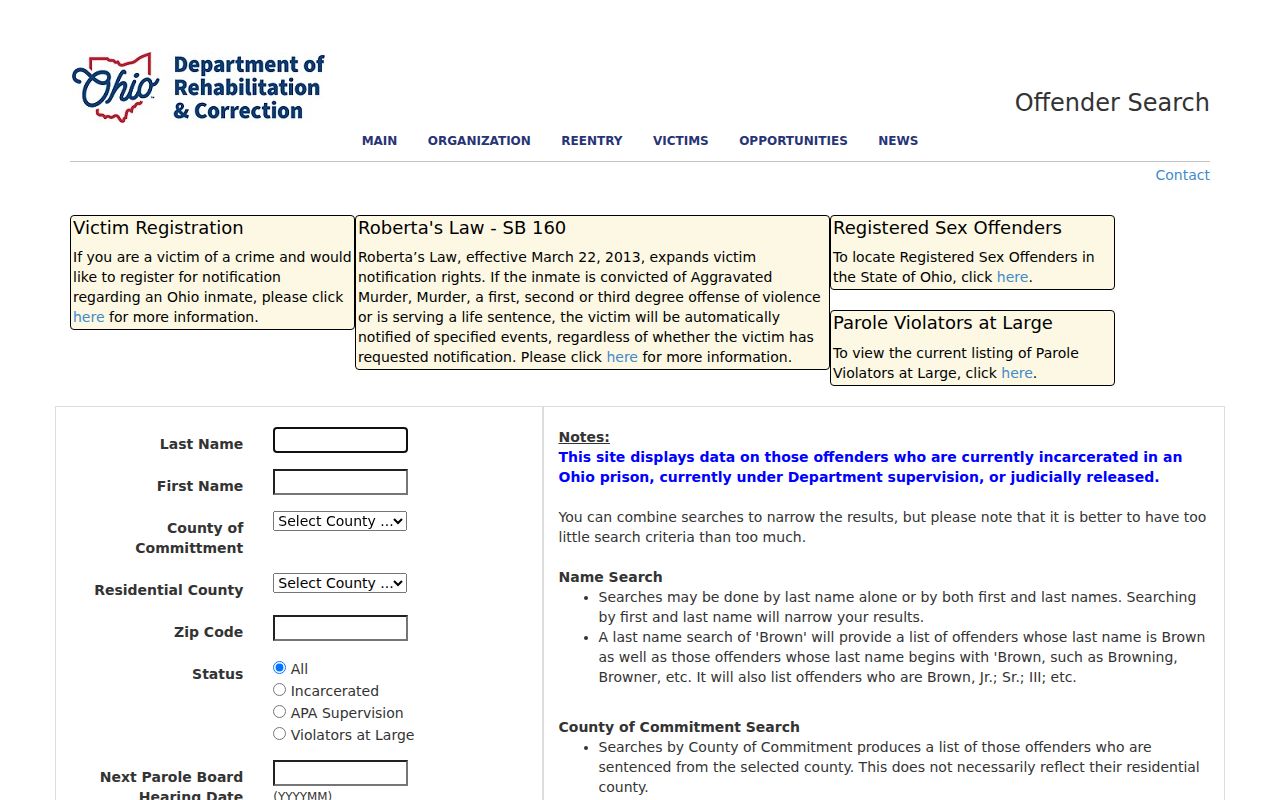
State search tools can provide a narrow, official lead, but they do not replace a Piqua current-record check. The Ohio Department of Rehabilitation and Correction Offender Search concerns the state prison system. It is not a Miami County jail roster and does not establish a person's current home address. Ohio law limits inmate-record disclosure, while allowing specified identification and custody information. Use a result only to identify the responsible record system, then verify any relevant matter through the appropriate official channel.
The Ohio DRC Offender Search is the official statewide facility-search source represented here.
A state-facility result has a distinct scope from local property, court, voter, or library material and should not be used to infer household information.
Piqua Directory Record Terms
Parcel: a taxed unit of land identified by the Auditor. Situs address: the physical location of that parcel. Index: a finding tool that points to a recorded document. Criss-cross directory: an address-arranged section, when a historical volume includes one, that may list printed occupants or businesses by street number.
These labels prevent common errors. A parcel card's taxpayer or deeded-owner mailing field is not the same as the situs. An index may point to a document but still require an image or office copy to confirm the transaction. A historical criss-cross listing records what a particular volume printed, and directory canvassing can predate publication. Preserve the exact street spelling, name format, record date, and source reference as you compare Piqua records.
Piqua Historical Directory Records
Historical directories add a dated layer that modern records do not replace. Piqua Public Library's documented city and telephone directory shelf covers 1911 through 1986, with the actual alphabetical, telephone, classified, or numerical format to be confirmed volume by volume. A name directory can give a printed address or family clue. A numerical section, if present, lets a researcher read one street in order. The full collection guide is available through the Piqua Directory Book.
For earlier physical context, the Library of Congress hosts an 18-sheet Piqua Sanborn map dated June 1892. It shows structures and street layout, not people. For later municipal work, the library's manuscript listing identifies Piqua Building and Zoning Permits, MS-281, for 1986 through 2004. The overlapping sources make it possible to test an address timeline without inventing a continuous record or assuming every building had the same history.
Piqua Deed and Claim Safety
Miami County offers a free Property Fraud Alert that notifies a subscriber by email, text, or voicemail after a document is recorded in the subscriber's name. It does not decide ownership or prevent fraud, but it is a useful prompt to inspect the actual record. The county also warns about paid deed-copy solicitations. A free watermarked image is available through the Recorder's authorized search route, and a clean copy can be requested from the office.
The Miami County Property Fraud Alert explains the county's official notification option.
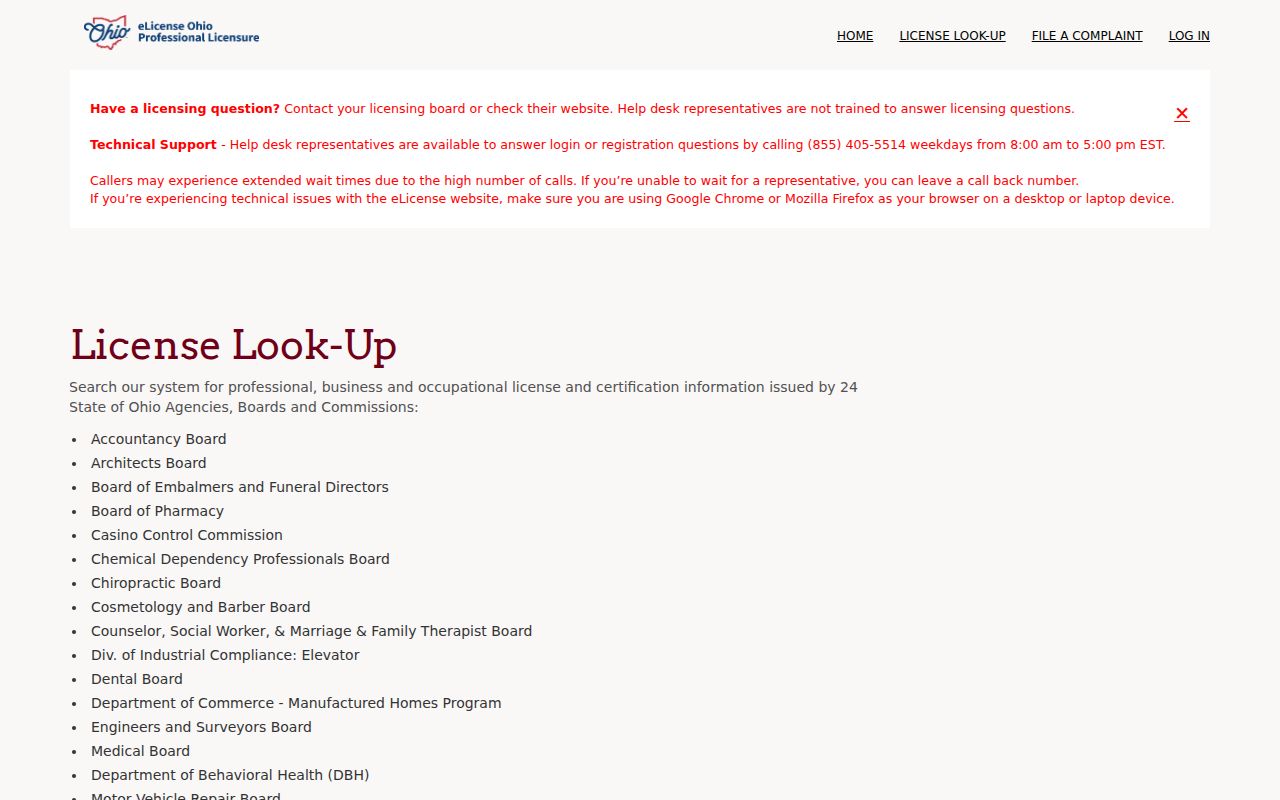
For a narrow professional-identity check, Ohio eLicense searches public licensing data by last name and first initial or an exact license number after a board selection. The state says the system covers 24 agencies, boards, and commissions and is updated daily. It can help distinguish a licensed individual with a similar name, but it is not evidence of a Piqua home address.
The Ohio eLicense License Look-Up is the official professional-license search depicted below.
When a notice or search result raises a concern, verify it through the named custodian using an independently found contact route, not a link or payment request in an unsolicited message.