
Piqua Previous Residents by Era
The Piqua backward trail changes with the date. Miami County deeds reach back to county formation in 1807, yet the free Basic Records Search is a modern route and the Recorder directs Piqua pre-1980 researchers to contact the office. Piqua's library provides a different layer: Piqua city and telephone directories are documented from 1911 through 1986, and the Piqua manuscript inventory names building and zoning permits from 1986 through 2004. The right Piqua source depends on what the address needs to prove.
| Source | Documented dates | Custodian or repository | Address-history value |
|---|---|---|---|
| Piqua-area Recorder deed records | From 1807 | Miami County Recorder for Piqua | Parties, recording references, legal description, and ownership sequence |
| Basic Records Search for Piqua | Modern route; call for pre-1980 help | Recorder online search for Piqua | Watermarked instrument images and name-led access |
| Piqua city and telephone directories | 1911-1986 verified shelf run | Piqua Public Library Local History | Historic listed address or telephone association, volume by volume |
| Piqua Sanborn Fire Insurance Map | 1892, 18 sheets | Library of Congress and Piqua local history | Piqua street and building context, not occupants |
| Piqua MS-281 permits | 1986-2004 | Piqua Public Library | Piqua building and zoning administrative trail |
| Piqua Probate estates | From 1807 | Miami County Probate Court | Piqua estate and heir context when a dated person trail reaches a death |
These Piqua sources are not a seamless online timeline. They are overlapping Piqua records that need to be compared by date, legal description, exact street spelling, and original Piqua citation.
Piqua Past Residents Start With a Parcel
Begin at the Miami County Auditor. Its one search field accepts a parcel, owner, or address, and county guidance says a house number can be an efficient starting input. On the returned card, record the parcel number, situs address, municipality, legal description, deeded owner, deeded-owner mailing address, taxpayer mailing address, sales, and any owner-occupied or homestead field. A situs is the physical property address.
Keep the three Piqua address concepts separate. The owner or taxpayer mailing line may be a forwarding, contact, or agent address, not proof of who lived at the Piqua house. A Piqua tax flag is also not a household list. This first Piqua step supplies the legal description and current recorded owner that make earlier Piqua deed work safer.
Note: Miami County's core land-record offices are in Troy, even when the property has a Piqua mailing address.
Trace Piqua House History Through Deeds
A deed chain traces recorded ownership, not all former occupants. The Recorder recommends a name search because parcel and address identifiers do not appear on every instrument. Use the current owner and legal description from the Auditor card to find the relevant deed, then follow the named parties backward. Grantor means the party transferring an interest; grantee means the party receiving it.
- Open the Miami County Recorder online-search instructions and use Basic Records Search with last or business name and first name.
- Select the document name under its document number, then open the page icon for the free watermarked image. Record the document number, recording date, grantor, grantee, book or page when shown, and legal description.
- Search the earlier named owner as a grantee to locate that person's acquisition. Compare the lot, block, subdivision, or legal description before deciding it is the same property.
- Repeat until the online route ends. For pre-1980 material, contact the Recorder, use the available index-book routes, or inspect records at the office.
A Piqua chain of title is this documented ownership sequence. It can be interrupted by common names, legal-description changes, or an unindexed item, so preserve the Piqua citation at every link rather than relying on a Piqua street address alone.
Piqua Address-History Index Checks
Miami County gives Piqua researchers a rare, specific caution for the 1980 through 1999 period: verify indexed data against the Geographical Indexes. The Recorder's deeper routes include digitized Geographical, Green Abstract, Name, and Miscellaneous index books. These are useful Piqua bridges when a modern address search stalls, but they should be read alongside the Piqua deed's legal description and tax-map context.
The Laredo Anywhere information page is the county-identified advanced route for in-depth title and genealogy work.
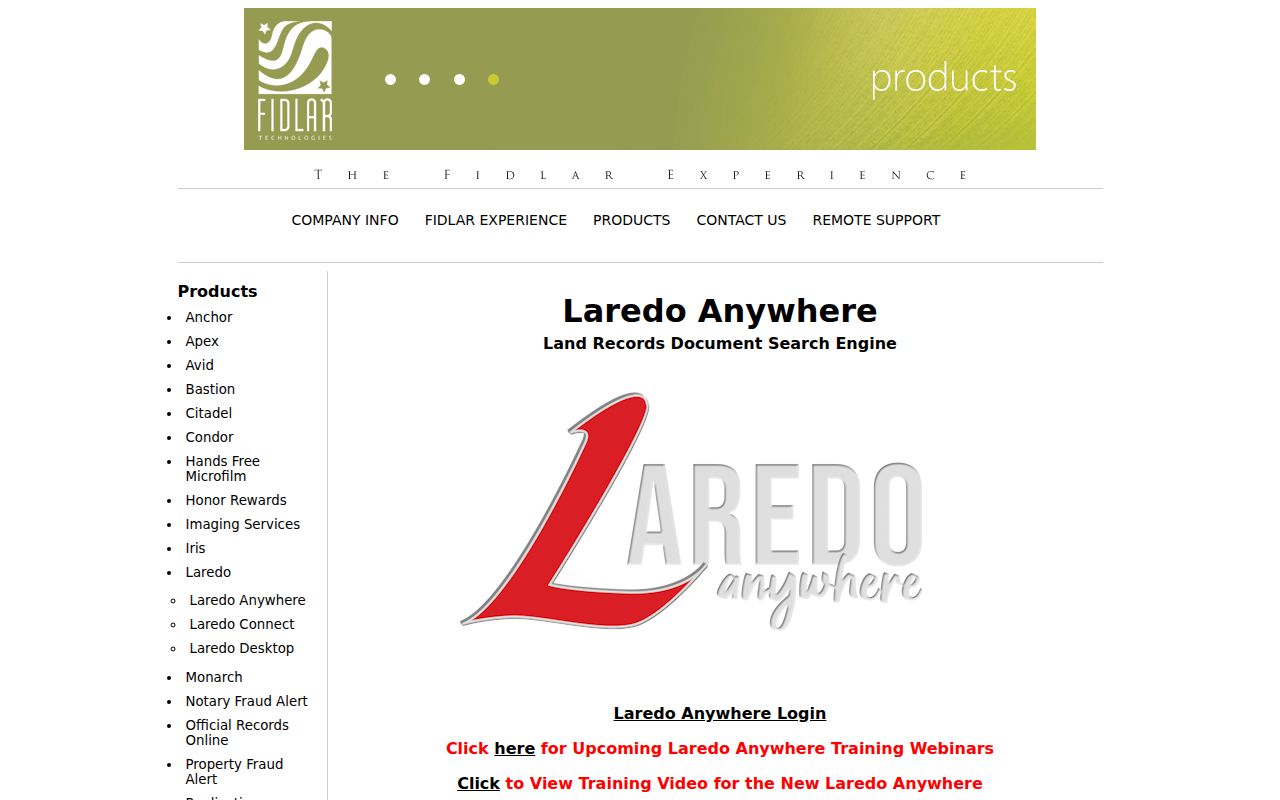
Its advanced access is a research path, not a substitute for checking the appropriate geographical index or the Recorder counter.
Piqua House History and Recorder Copies
Basic Search images are free but watermarked. When a clear Piqua copy is needed for a file, the Recorder states that non-watermarked copies are available through the office for $2 per page beginning January 2026; certified copies add $1 per seal. A recording fee is different from a copy fee, so it should not be used to estimate a Piqua research request. Ask for the document reference and the type of copy needed.
The Recorder document and copy-fee page is the source for this copy procedure.
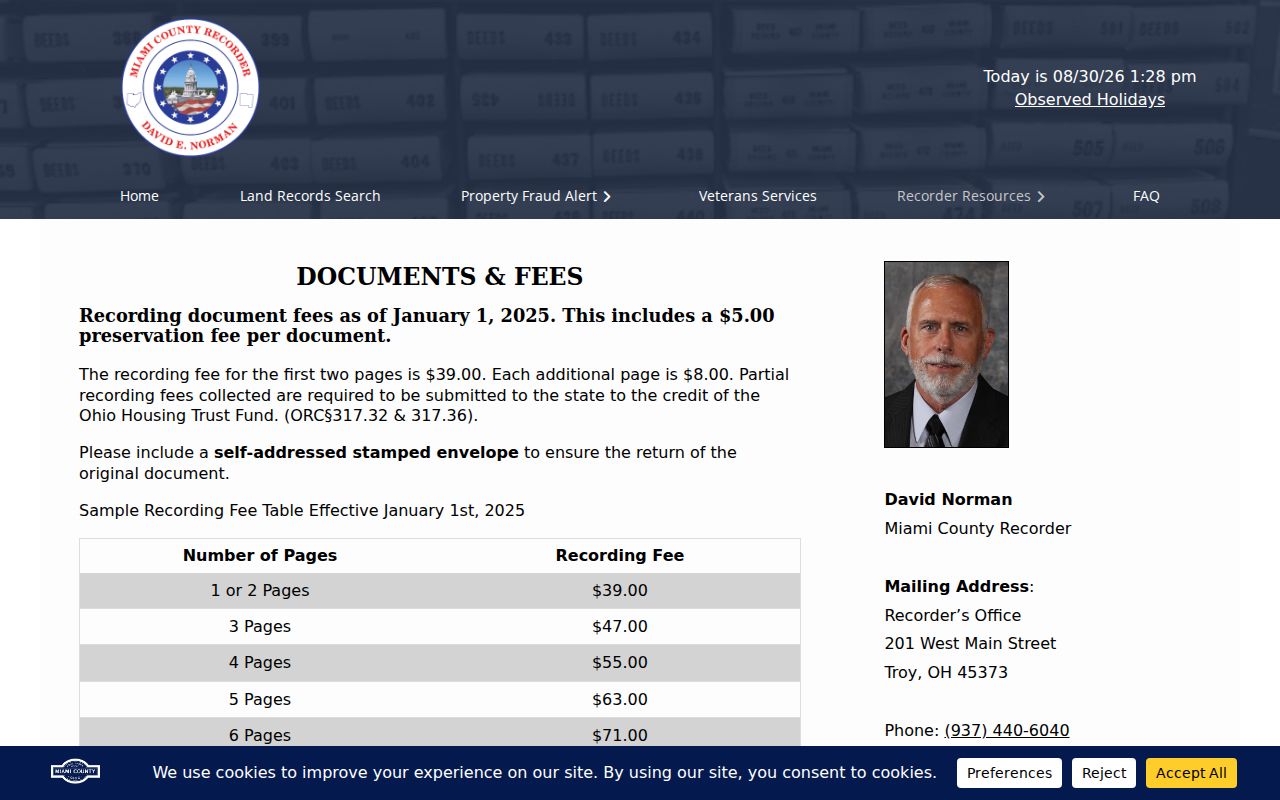
A clean copy confirms the recorded instrument; it does not turn an ownership record into evidence of every past resident.
Miami County also warns Piqua readers against unsolicited offers for deed copies. The official Piqua search route or the Recorder counter is the safer way to obtain a record that is actually needed.
Piqua Past Residents in House Files
Piqua Public Library's Local History and Genealogy Department is the useful local fallback when a deed supplies names but not the human story of an address. Its noncirculating files cover houses, families, businesses, events, Piqua and Lehman yearbooks, newspapers, and migration connections. Ask for a narrow address, family name, and year range. Library staff can identify whether a house file, directory, newspaper, manuscript, or microfilm run is relevant without treating private contact information as a research target.
The January 2026 manuscript listing names MS-281, Piqua Building and Zoning Permits for 1986 through 2004. A request to Piqua Planning and Zoning can also seek a public permit or code file by property address, project type, date range, and known permit number. The current GovWell permit route was not captured with a public search-field inventory, so do not assume it offers an address search.
The Miami County deed-copy scam warning explains why a record should be requested from the actual custodian.
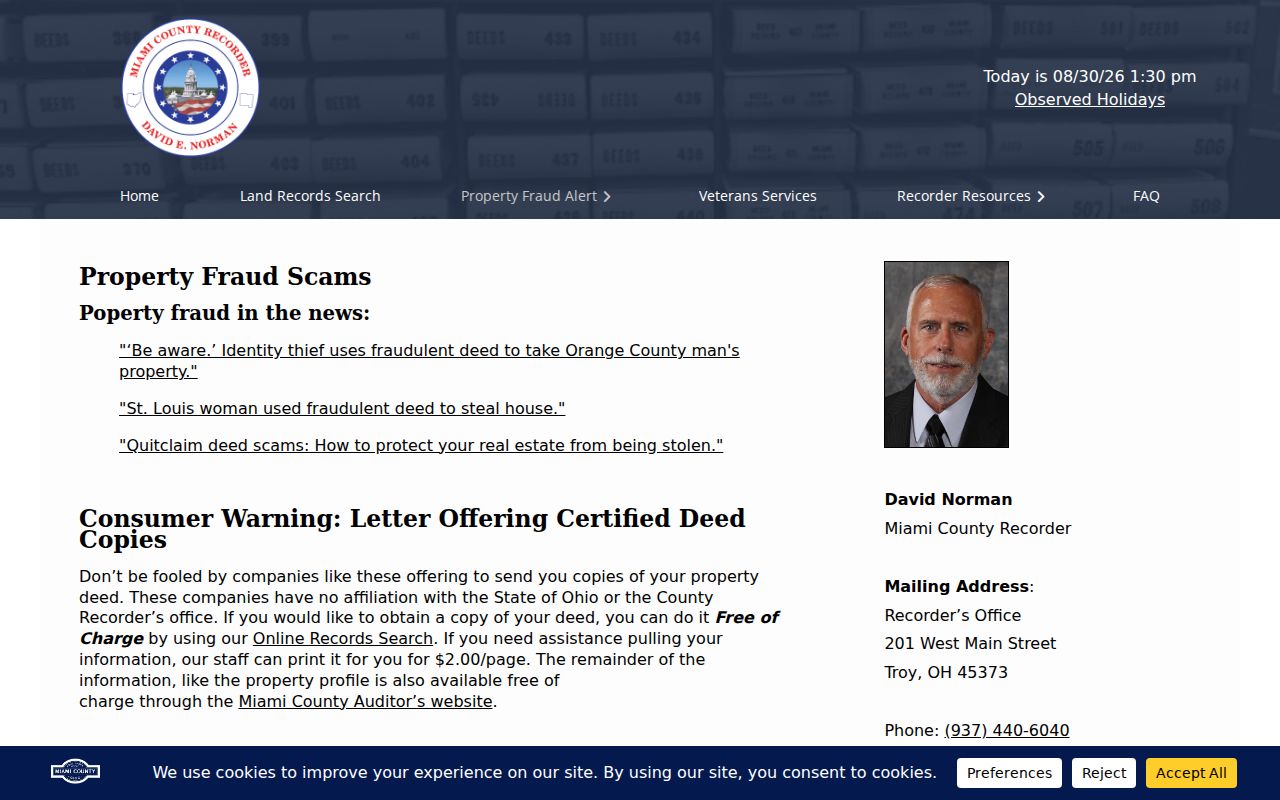
The county warning reinforces a simple rule: use an official record path and compare the instrument details before relying on a property-history claim.
Piqua Past Households in Directories
For Piqua past residents rather than owners, Piqua's verified 1911-1986 city and telephone directory shelf is the central local source. Ask the Piqua Local History Department whether the chosen year includes an alphabetical, telephone, or numerical street section. A criss-cross directory is an address-ordered section that may place Piqua listings in street-number order. Not every Piqua volume has one, so confirm the format before using it as an address source.
- Choose a directory year close to the deed or permit date and record the exact printed name, initials, address, and any residence or business notation.
- Check the next available volume for the same spelling, a new address, or a changed household clue. A directory canvass can precede publication, so record its printed year rather than assuming a single date of occupancy.
- Pair the entry with the nearest available federal census year. Census images are public through 1950, and the library offers in-library database routes for historical research.
- Use the deed, probate, newspaper, and map trail to test the relationship between the person, the address, and the building.
The Piqua collections and how to read their entries are treated in greater depth in the Piqua Directory Book. A Piqua directory listing is a dated lead, not proof that a household was present every day of that year.
Piqua House History and Sanborn Maps
The Library of Congress Piqua Sanborn map is dated June 1892 and contains 18 sheets. It can show a street, block, structure, and building footprint before many later directory volumes. It does not name occupants. Use it to test whether a structure or street configuration existed, then bring in the directory, deed, permit, newspaper, or census source that speaks to people.
When an old Piqua street label is confusing, keep its original spelling and number. Compare Piqua cross streets in the directory and Sanborn material, consult Piqua maps or tax maps, and then check recorded street-name-change or street-vacation instruments and Piqua City Council minute microfilm. Research found no Piqua-wide renumbering date, so a Piqua change should not be assumed.
Piqua Past Residents Through Probate
Probate is a useful endpoint when an address trail reaches a death or estate event. Miami County Probate reports estate, guardianship, trust, and miscellaneous public records from 1807, marriage from 1807, birth from 1853, and death from 1867. CaseLook can lag at least 24 hours, and the court directs people who need verified information to make a request or visit. An estate file may identify a decedent, fiduciary, heirs, real property, accountings, or distribution, but relationship claims still need confirmation inside the filed record.
Miami County's free Property Fraud Alert is a separate name-based notice service. It alerts a subscriber after a document is recorded, but it cannot decide ownership or prevent fraud.
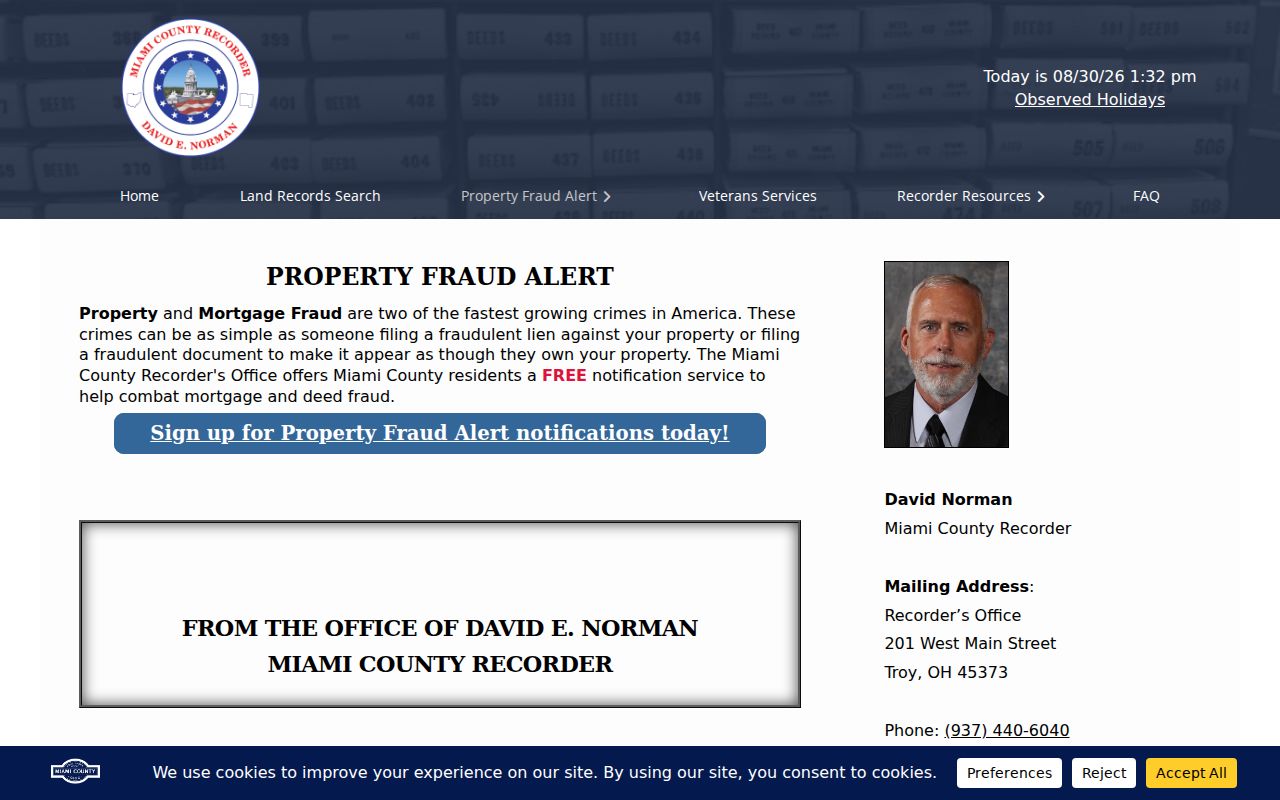
The alert is useful for monitoring a recorded-name event, not for proving a historical resident or resolving title.
For an official claim lead rather than a property history, Ohio's unclaimed-funds search permits optional city and ZIP narrowers. A result requires identity and claim verification and should not be used to contact someone at a reported old address.
The state search is an official claim channel, not another source for deciding who lived at a Piqua address.