
Piqua Block Record Sources
Each public source describes a different part of a Piqua block. An Auditor card for a Piqua parcel and its GIS Mini Map begin with land and recorded-owner details. Piqua tax maps explain lot lines and subdivision context. The Recorder can follow a Piqua legal description through recorded instruments. Election records are not a Piqua block roster, and Piqua library material is historical. This division of labor is important because an adjacent owner is not automatically an adjacent resident.
| Source | What it can show about a block | Access and boundary |
|---|---|---|
| Auditor and GIS Mini Map | Subject and adjacent parcels, recorded owner, situs, legal and tax context | Open parcel cards one at a time; maps do not list all residents. |
| Piqua Engineer tax maps and plats | Lot lines, Piqua street geometry, subdivision, survey or plat references | Reference maps; confirm current Piqua details with the Map Department. |
| Recorder | Recorded parties and transactions connected by legal description | Name and legal-description method, not a neighbor directory. |
| Public voter material | Limited elector and precinct information where the law permits | Person-first lookup; confidential registrations are protected. |
| City permits or code files | Public address-specific project or administrative trail | Request by address and date; not proof of daily occupancy. |
| Library directories and archives | Historic street, household, and organization context | Verify volume and date; an old listing is not current proof. |
The Ohio Public Records Act is the general inspection-and-copy framework, but specific exemptions and confidentiality laws still control protected information.
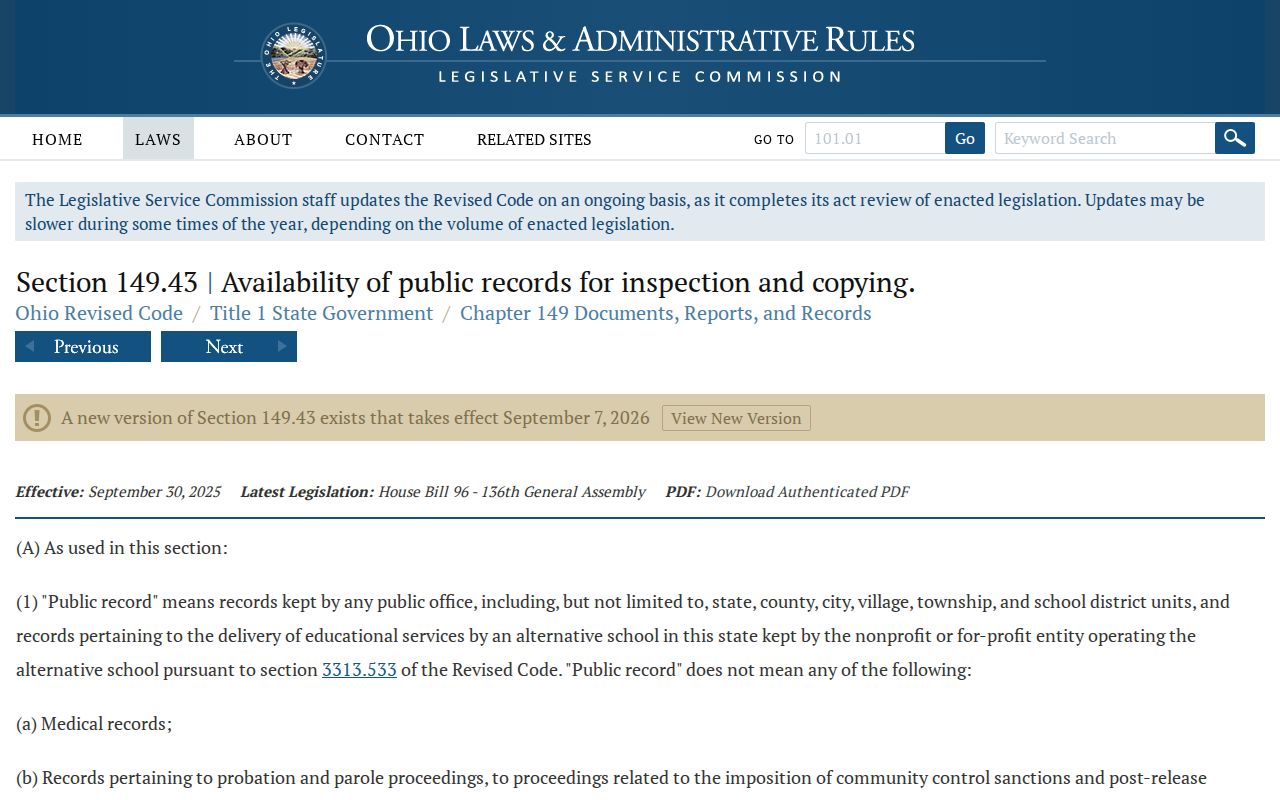
The statute supports access to qualifying Piqua public records, not a promise that every Piqua address-linked detail is public.
Piqua Block Research Starts at One Parcel
Use the Miami County Auditor to locate the subject parcel. Its public search accepts parcel, owner, or address. A returned card can show the parcel number, situs address, municipality, township, school district, recorded owner, deeded-owner mailing address, taxpayer mailing address, legal description, values, exemptions, sales, and tax tabs. Start with the property itself rather than a person.
Save the Piqua parcel number and legal description before moving to a map. The situs is the Piqua physical property address. Deeded-owner and taxpayer mailing fields are contact fields that may differ from one another and from the situs. They do not prove that any named person occupies the Piqua parcel. An owner-occupied or homestead field is likewise a limited Piqua tax-record detail, not a household list.
Map a Piqua Block Parcel to Parcel
The safe Piqua method is to identify and click adjoining parcels, one at a time. The inspected Auditor card links to a GIS Mini Map. Public sources did not expose a verified Piqua buffer, radius, or neighbor-menu control, so no such feature should be assumed. Use the map for location context, then confirm each parcel against its own Auditor card and legal description.
- Find the subject address in the Auditor search and open its parcel card.
- Open the linked GIS Mini Map and identify the subject parcel.
- Visually inspect only the immediately adjoining parcels, then open their separate cards for parcel, situs, owner, and legal-description context.
- Compare the Piqua Lot Index or quadrant tax map when a lot line, block, or older legal description is unclear.
- For a full named-street record chain rather than the immediate block, use the Piqua street directory.
This Piqua flow gives a land-and-record view of a Piqua block. It does not identify all people who may be present at a Piqua property, and it does not establish title without the underlying recorded instruments.
Piqua Block Tax Map Context
Miami County's Engineer Tax Map Department supplies the Piqua Lot Index and Piqua NE, NW, SE, and SW map selections. The department maintains Piqua survey plats, record plats, tax maps, aerial photographs, and other map material. Those Piqua resources are useful when a parcel card has a short description or when a Piqua block crosses a subdivision, lot, or historic map reference. The county cautions that online PDFs are archived or reference documents and directs people to confirm current Piqua information with the Map Department.
Piqua tax maps explain parcel geography. They do not identify who lives in a Piqua building. A Piqua boundary line, a mailing address, and a legal description are separate facts that should remain separate in any Piqua neighbors search.
Note: The map is a starting point for adjacent parcels, not an authority for personal identity.
Piqua Neighbors Are Not a Voter Roster
Ohio's public voter lookup is person-first. It requires first name, last name, and county, and then can offer a street-name narrowing field. It does not provide an unrestricted Piqua block browse. Ohio law permits public inspection of qualifying registration material at the Board of Elections, subject to timing restrictions when copying would interfere with election work. A request for lawful public material should identify the date or precinct needed and ask the Miami County Board about its current format, fee, and procedure.
The Ohio voter-record statute sets the public status and redaction rules.
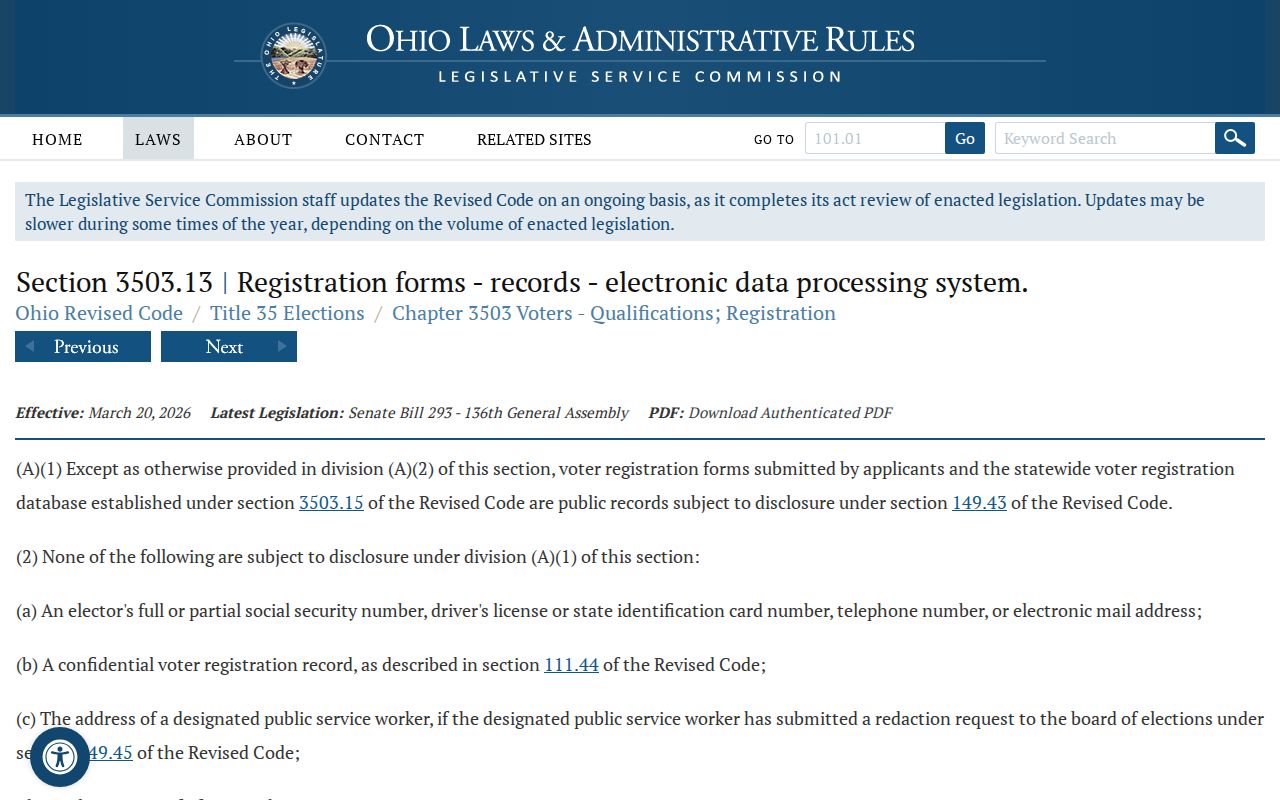
Piqua public voter material has statutory limits and cannot be used to reconstruct a complete Piqua block population or infer a protected person's identity.
Where public, the statutory result fields for a Piqua elector may include name, birth date, current residence address, precinct number, registration date, participation history, and last activity date. Phone, email, Social Security, driver or state ID information, and confidential registrations are not part of that Piqua public result. Participation history does not show ballot choices.
Piqua Community-History Records
Community information has an evidence boundary. Older city material mentions neighborhood associations, the City Neighborhood Improvement Team, and HELP, but the research did not locate a current official Piqua association roster, membership directory, boundaries, or joining rules. The city is not an appropriate source for member lists. A historical organization reference should be treated as context, not an invitation to collect private contacts.
| Community-history source | Documented use | Careful boundary |
|---|---|---|
| Piqua Planning and Zoning or City Commission records | Locate public planning, map, or meeting context for a block | Use public agendas or requests; do not claim a current association list. |
| Piqua Public Library Local History | Historical house, family, church, school, veterans, and organizational materials | Repository rules, consent, copyright, and collection limits apply. |
| Library manuscripts | Historical Chamber, church, Eagles auxiliary, Korean War Veterans, reunion, and club material | These are voluntary historical records, not current neighbor directories. |
| Miami County Historical and Genealogical Society | Directories, maps, cemetery, church, newspaper, and microfilm leads | Confirm source date and repository citation before using a lead. |
For Piqua community history, the Piqua Local History Department can be asked a specific place, organization, and year question. That preserves a useful Piqua human connection to the block without claiming a current Piqua roster that the evidence does not support.
Piqua Block Records and Compiled Data
Official records and commercial compiled neighbor tools serve different purposes. A parcel card and recorded instrument identify their custodian and scope. A compiled tool may combine records from different dates and sources, often with payment gates or stale matches. It should not override the Auditor, Recorder, Board of Elections, court, or library repository.
| Feature | Official Piqua or Miami County record | Commercial compiled category |
|---|---|---|
| Source control | Named custodian and record series | May mix public and nonpublic inputs from different dates |
| Best use | Verify a parcel, document, map, or dated public filing | Possible lead requiring independent confirmation |
| Correction path | Ask the actual custodian about its correction process | Use the provider's current correction process, if available |
| Block conclusion | Limited to the record's stated scope | May merge or omit people and should not be treated as proof |
A Piqua public parcel record says something about land and the recorded owner. It does not supply a verified Piqua list of neighbors, occupants, visitors, utility customers, or drivers.
Piqua Neighbor Privacy Limits
Piqua public availability has firm limits. Utility and driver records are private. Court, adoption, juvenile, medical, and confidential investigative records remain restricted under their own rules. Ohio Safe at Home protects qualifying survivors with a substitute address and removes confidential voter registrations from public voter databases, poll books, and registration lists used for Piqua searches. An empty Piqua result cannot prove that a person is absent from Piqua or from a particular block.
The Ohio vital-record access statute describes the signed-application rule for ordinary certified copies and the specific records that can be restricted.
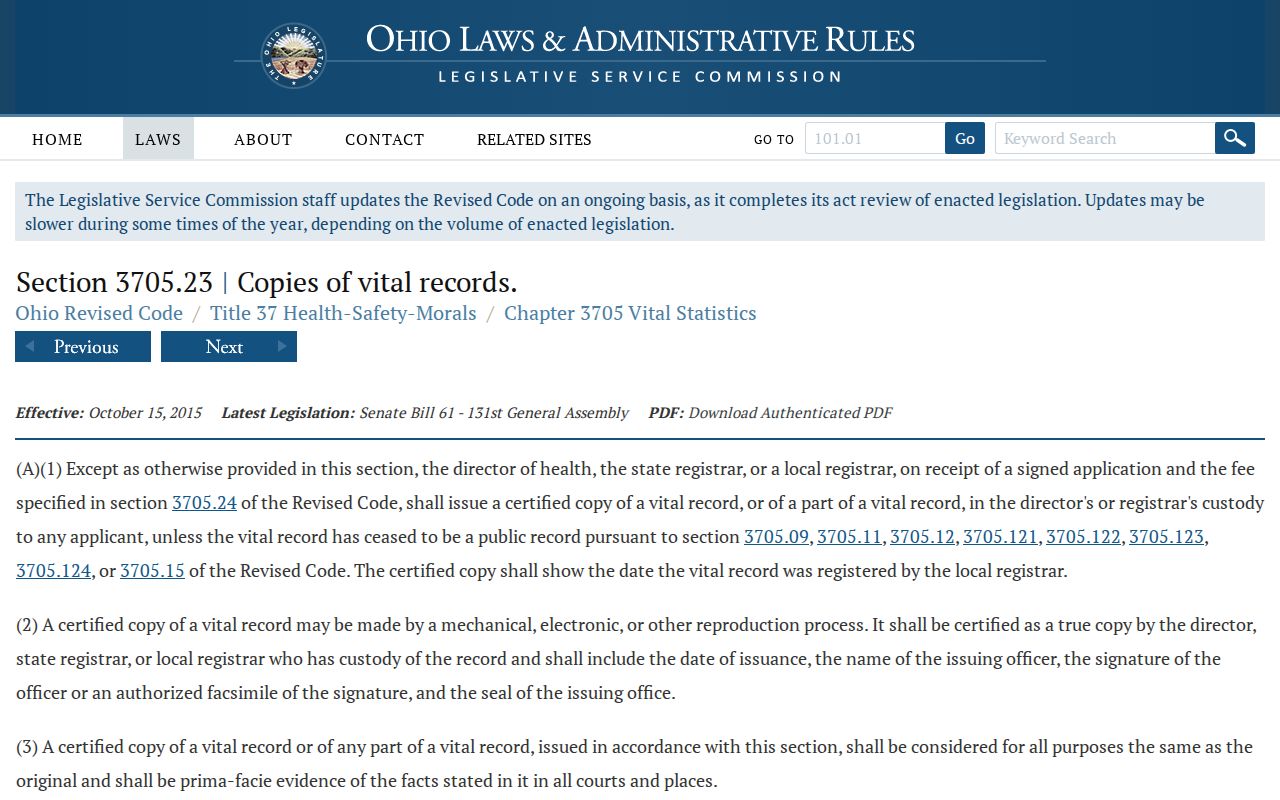
A vital record can confirm an event through the proper custodian, but it is not a block-level neighbor tool.
Piqua Online-Record Redaction
Ohio Revised Code 149.45 provides an online public-record redaction procedure for specified personal information, including Social Security numbers. A qualifying designated public service worker or former worker can seek address redaction from qualifying public internet records held by offices other than a county Auditor. The office must act where practicable or explain why it is impracticable. That is a targeted statutory procedure, not a universal removal right for every public document.
The Ohio online-record redaction statute is the primary source for this limited process.
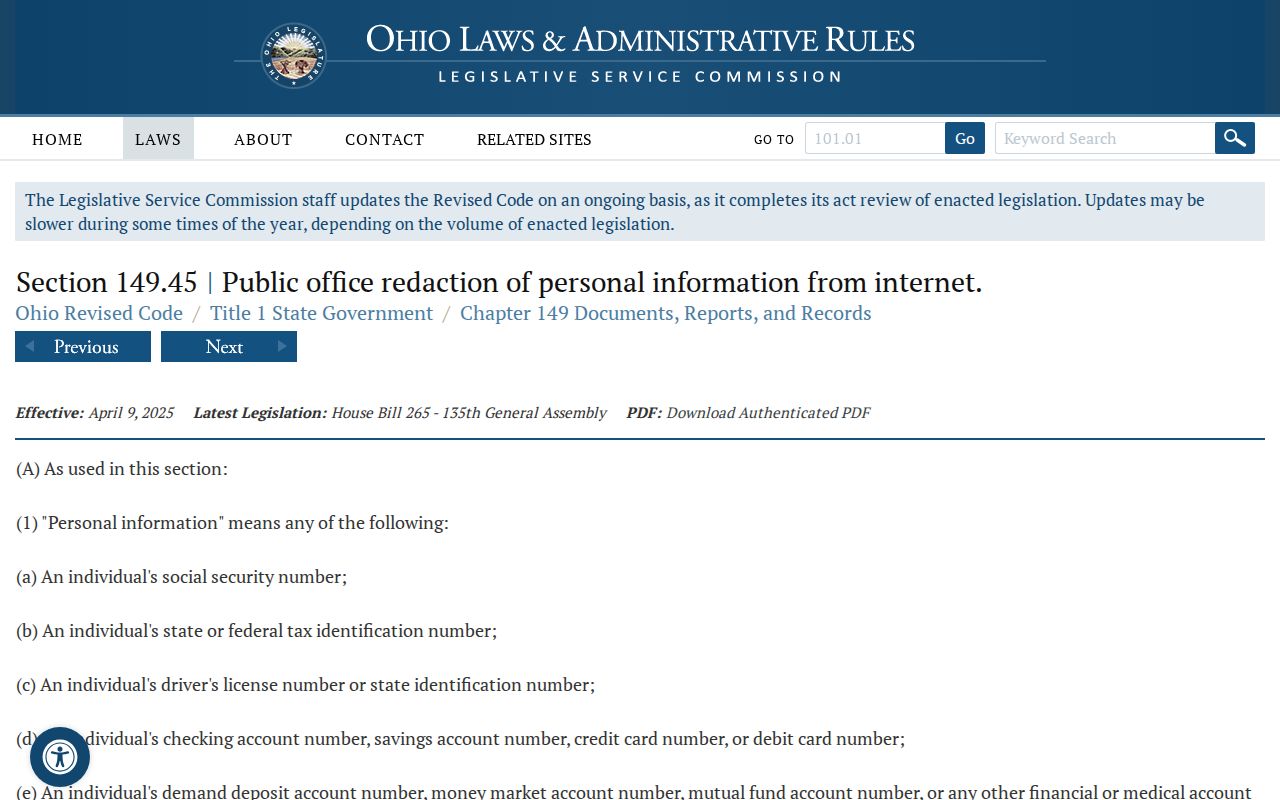
For a Piqua safety concern, identify the actual Piqua record custodian and use the applicable redaction or Safe at Home route rather than spreading the underlying Piqua address through a public request.